
Introducing the Burnt Remnants collection by Aaron Lennon
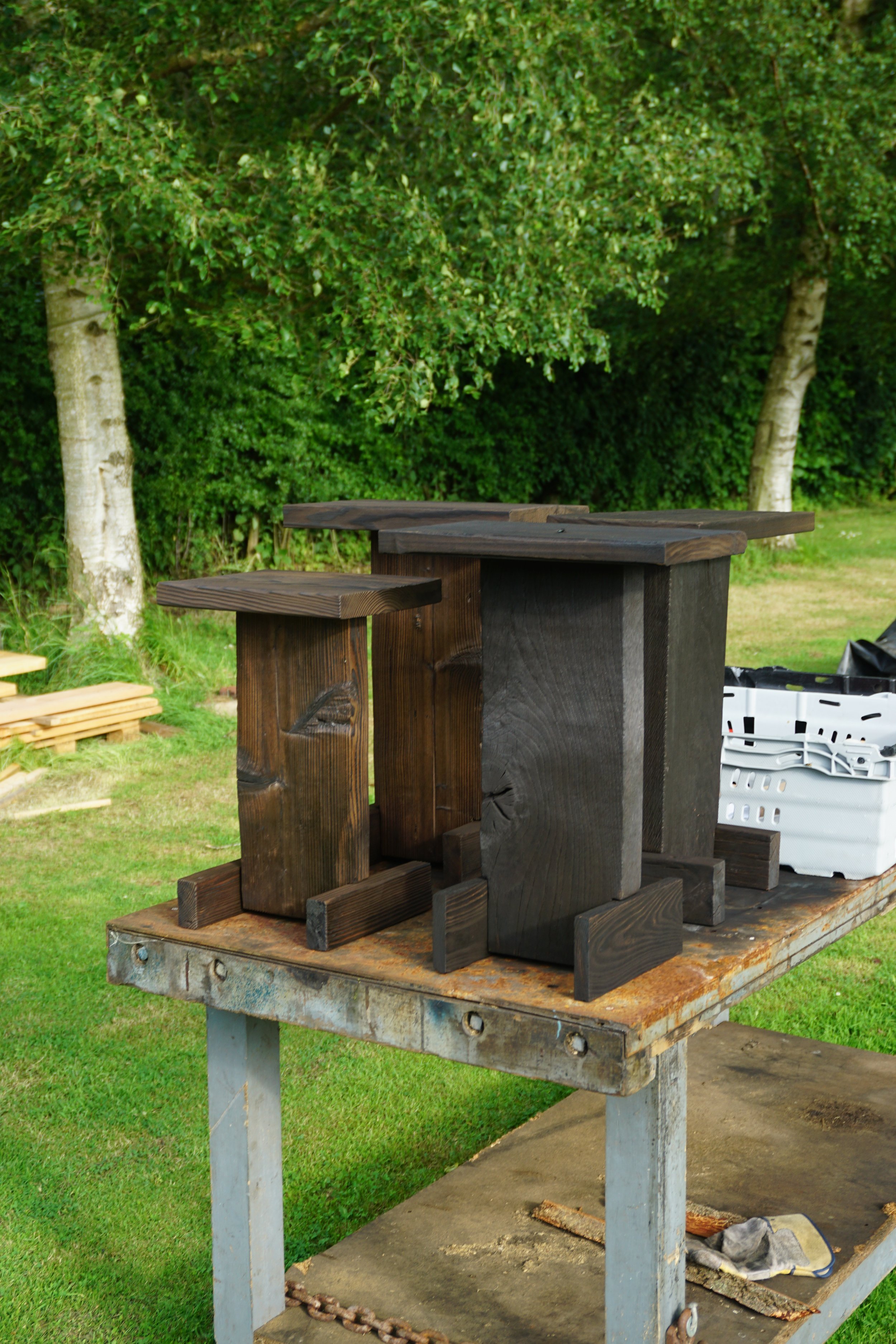
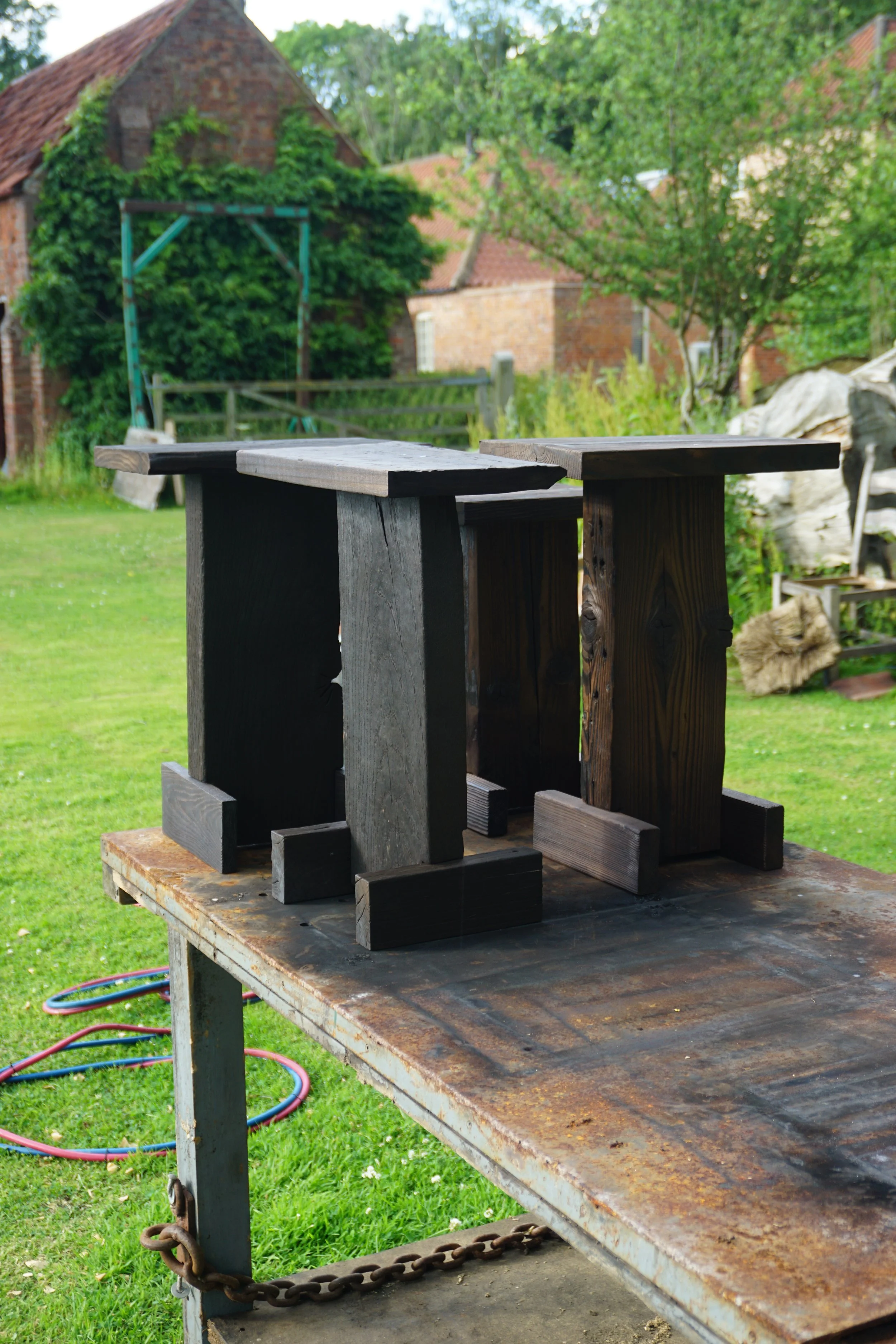
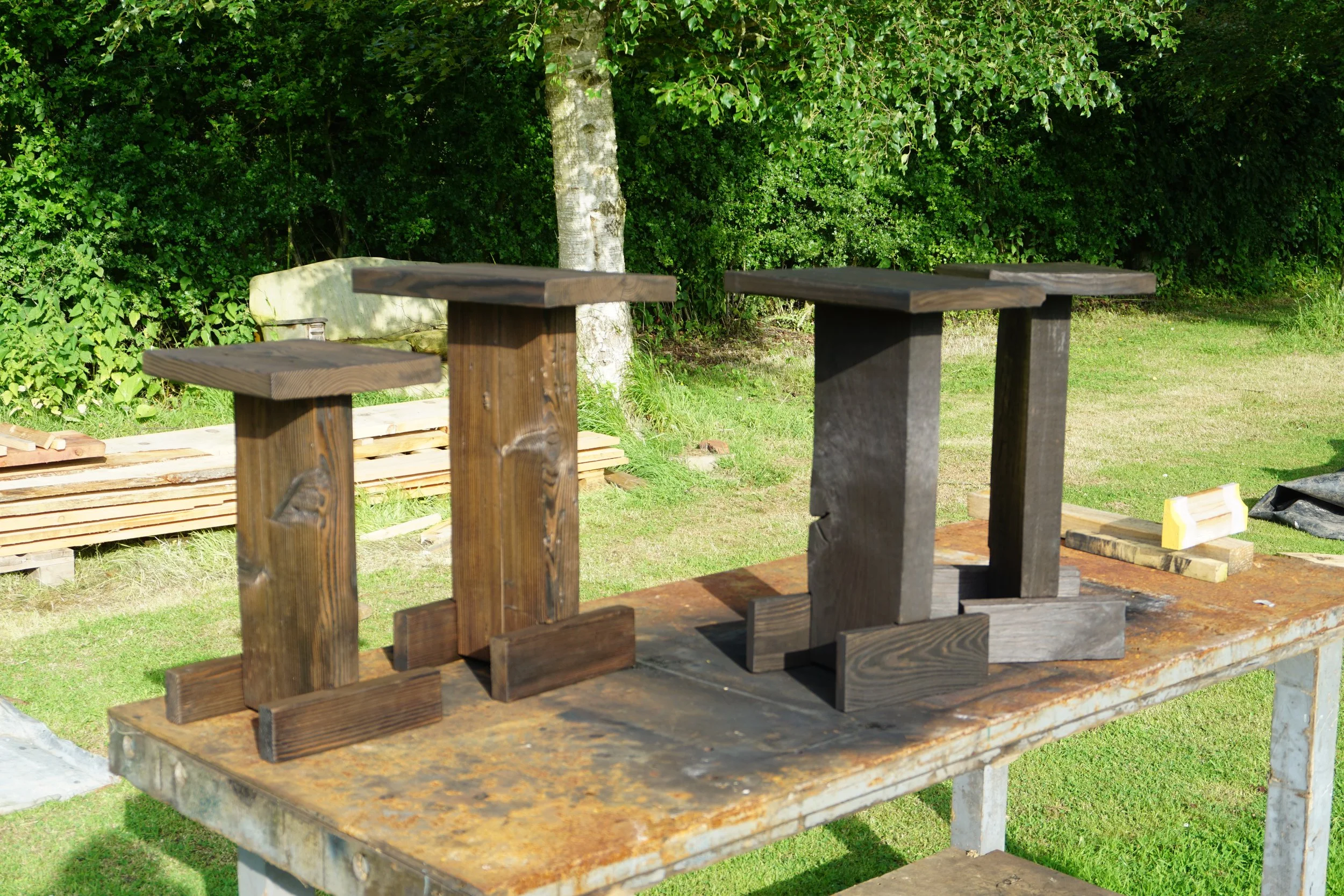
This collection has been developed after exploring an abundance of waste materials and experimental timber finishing techniques. Featuring the use of refuse materials from Victorian-era roof joists and industrial furniture manufacturing off-cuts, these materials are transformed into functional objects for the home environment.
This ongoing series will be launched with limited edition productions, which are available to purchase exclusively via the AfterGraft website.
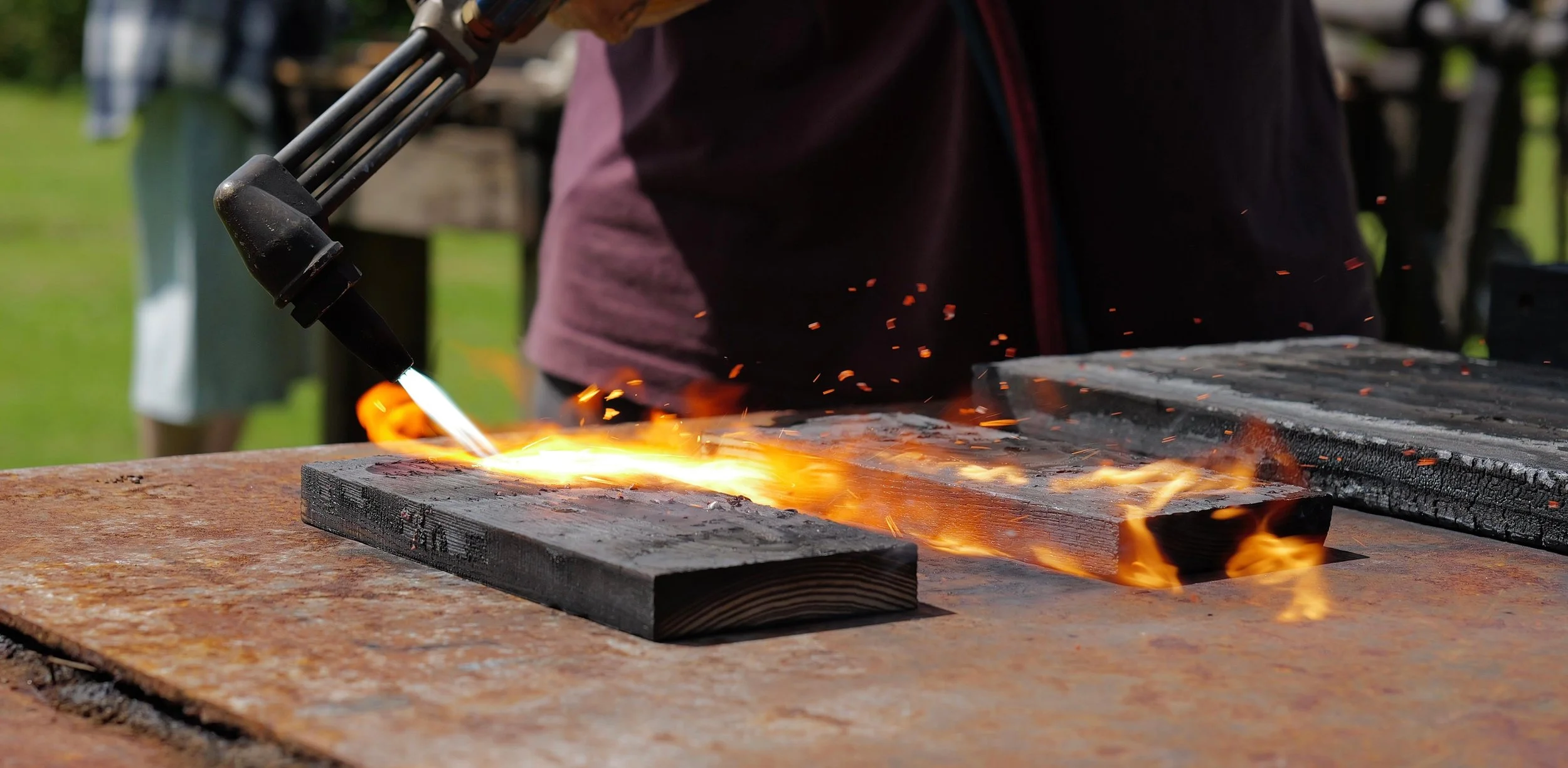
Oxyacetylene torch being used to burn the exterior faces of the timber.
When I first visited the Motor House, I had the opportunity to use an exciting range of tools and materials. Bob had purchased these beautiful slabs of English yew for us to work with, and there was a brand new planer-thicknesser to use. Undoubtedly, this was an incredible opportunity, although I always feel slightly guilty chopping into virgin material, so I pondered. This was when I first gazed upon a pile of what one may call 'junk' and thought, ‘I will make something of that.' I then started to prototype for what would become the Burnt Remnants collection.
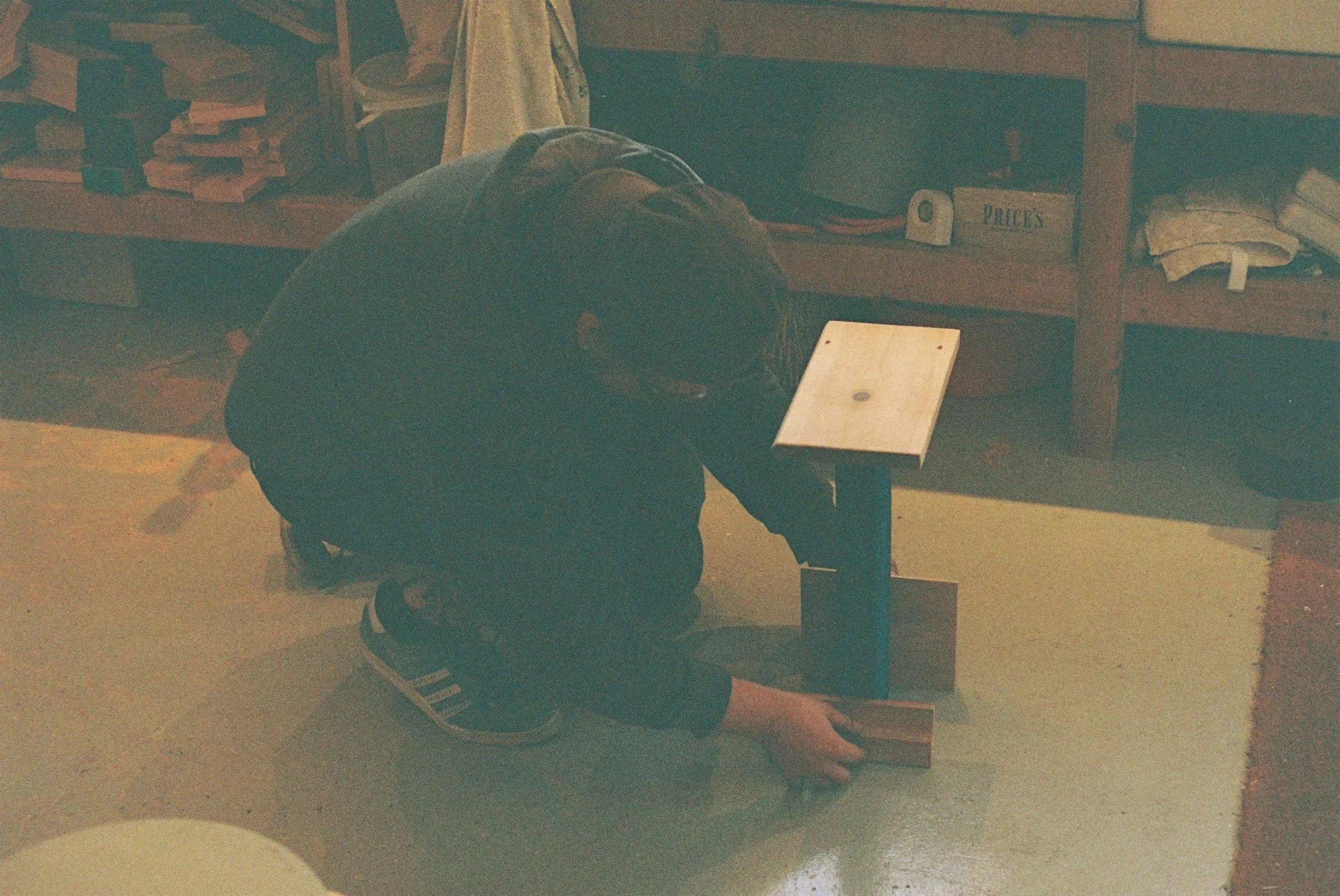
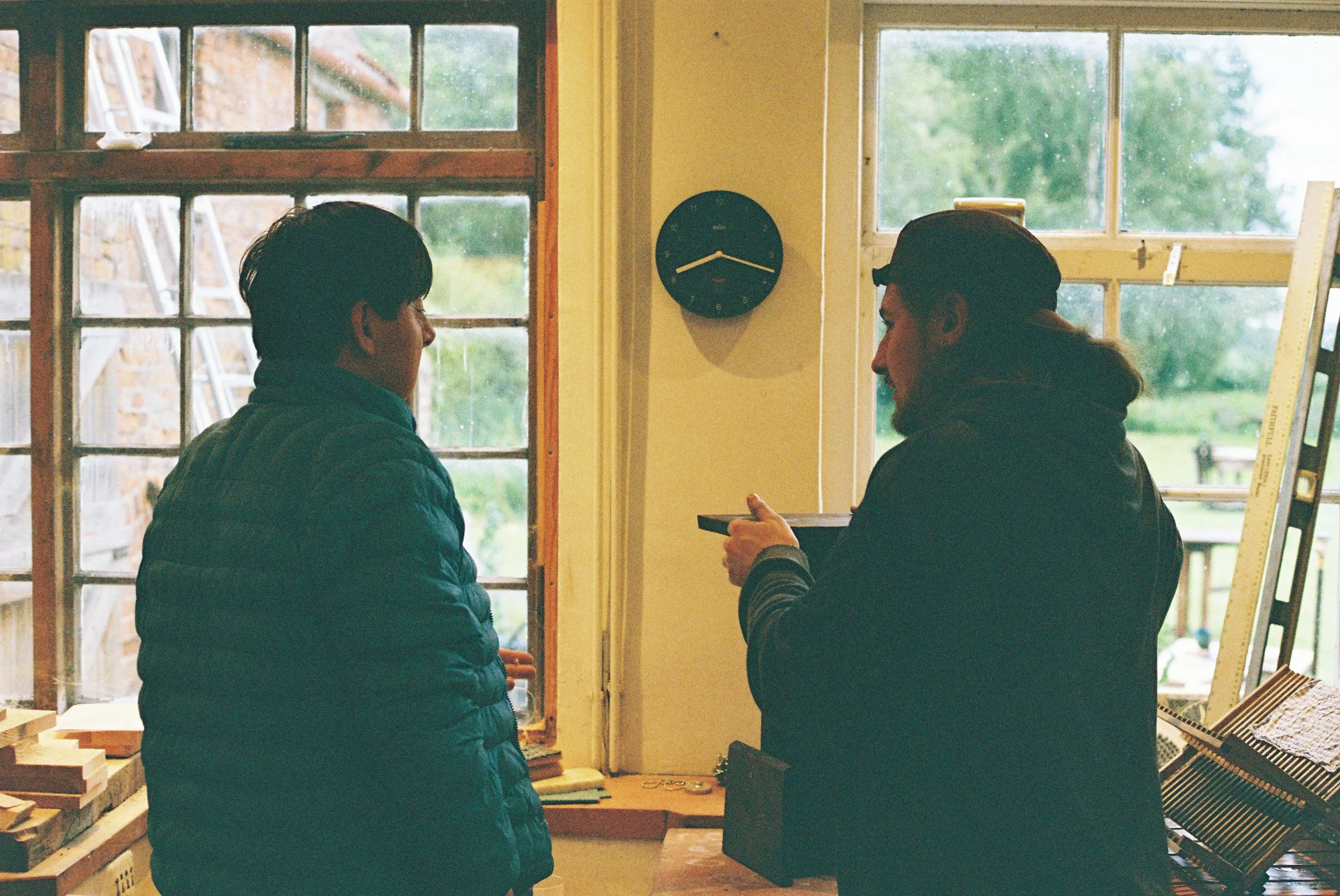
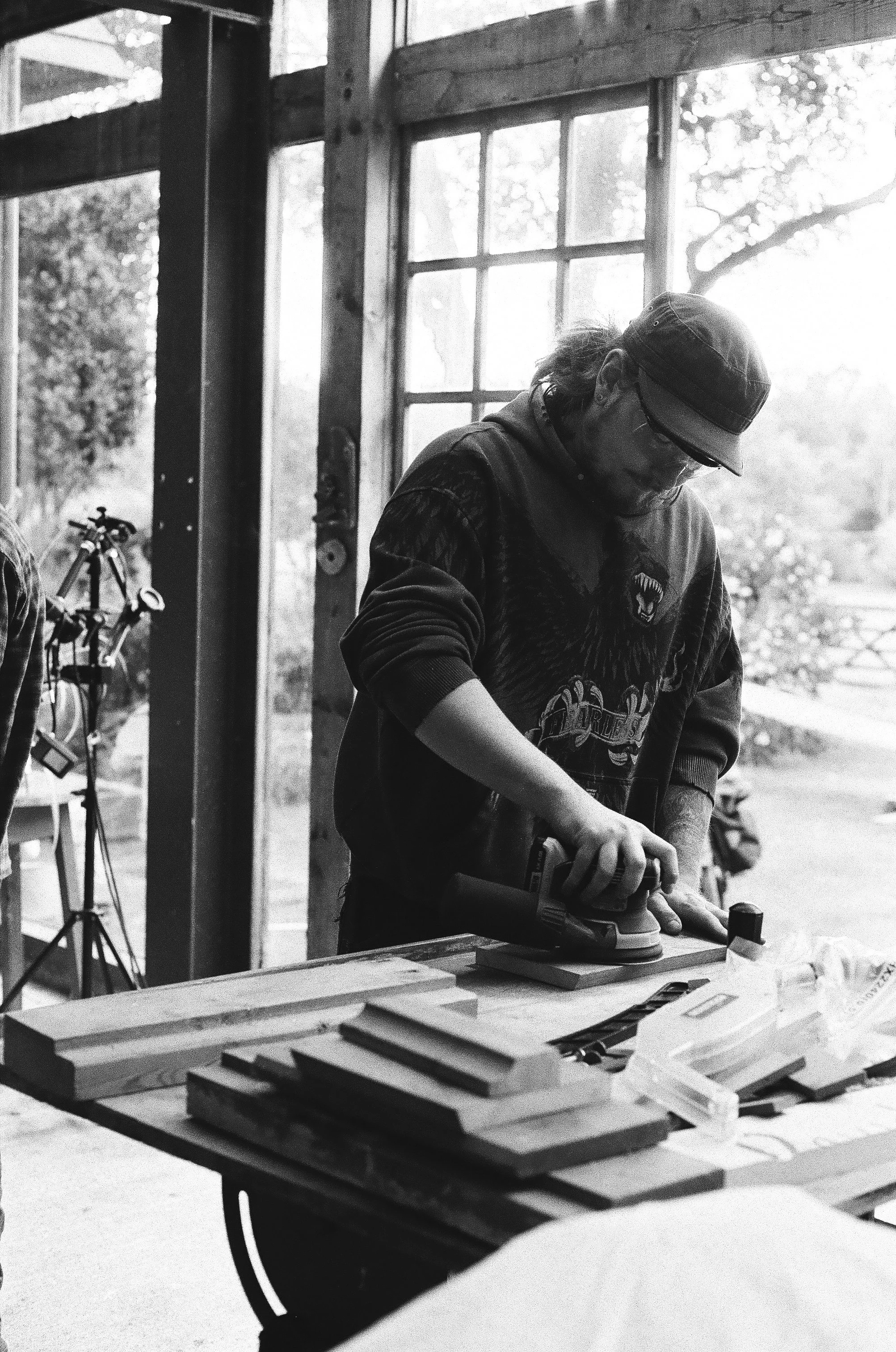
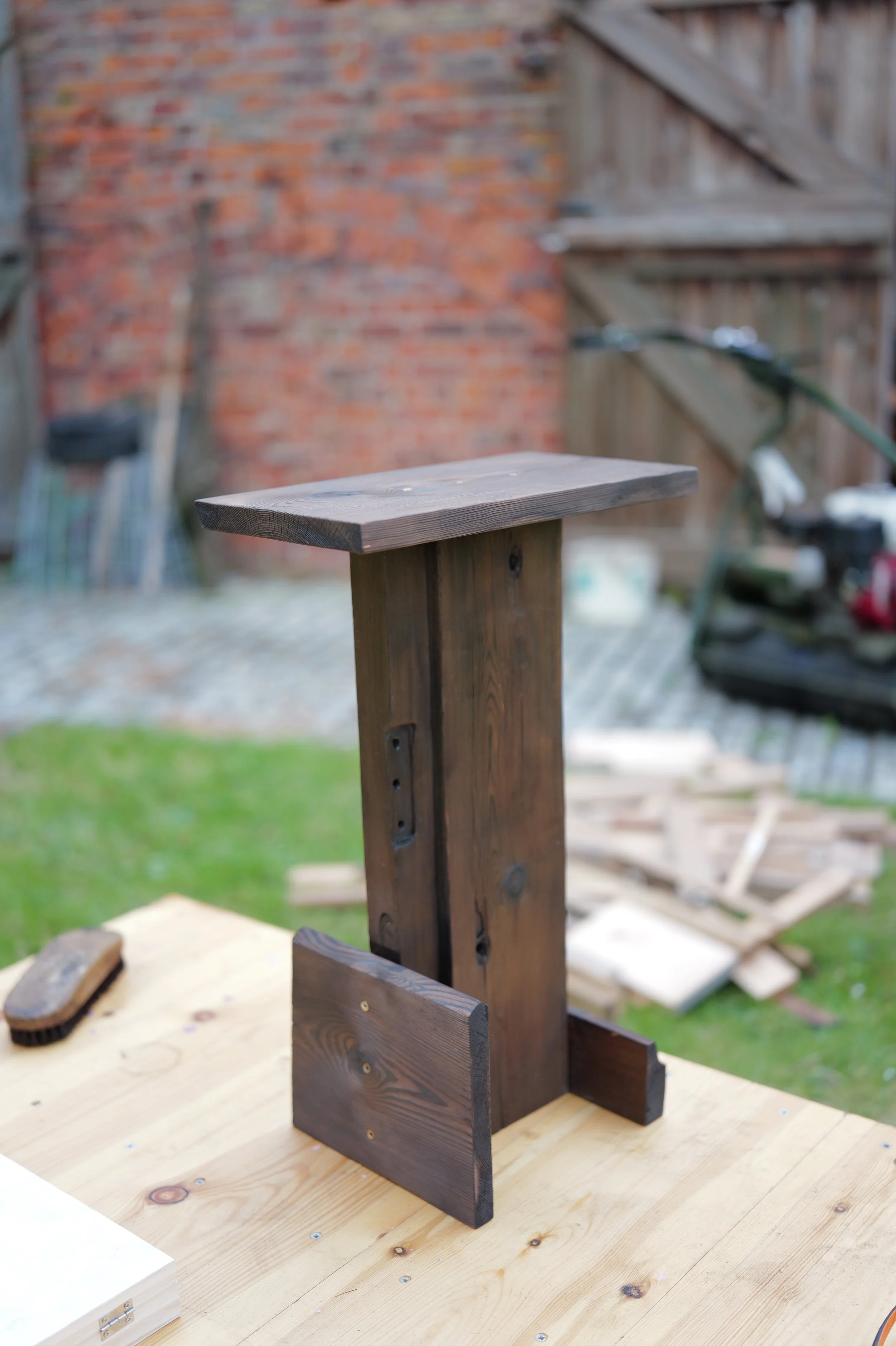
First time using the oxyacetylene to burn the initial prototype.
The initial prototype was manufactured using timber from various pieces of architectural salvage such as door frames and skirting board pieces. The historical context of the Motor House was a very interesting aspect, and actually using pieces from the building was a very rewarding process as well as an homage to the arts and crafts movement.
Why burn the wood?
Burning the wood might seem slightly mad at first; however, it is a technique that has actually been used for hundreds of years, originating in 18th-century Japan. The traditional method of burning cedar wood and cladding buildings is called Yakisugi. It not only looks beautiful, but it also protects the wood from mould and fungus as well as providing a natural water-resistant barrier. Traditionally this is only done with ‘hinoki cypress’ timber, which is native to Japan. However, the method can still be applied to most timbers to achieve a similar result.
Some more words on the collection and being a designer,
I understand that using scrap materials can be problematic as a maker. Whether it be knots, cracks, nails, warping, or rot, these are all things that cause vexation but can be worked around, and ultimately they can add character to the final piece. In a world where so much is made for speed and efficiency, it is luxurious to have the opportunity to slow down and appreciate a material that would otherwise be much easier to ignore and throw away. Personally, I get far more excited when I cannot fully calculate what a final outcome will look like. For me, being a maker and a designer is about resourcefulness and trying new things and also not getting frustrated when things do not work out. I suppose this is taught in schools as ‘iterative design,' the idea that you must do something over and over and change little bits as you go. If you try to control something too much, especially a design, you end up with design fixation or, even worse, the dreaded designer's block and inevitably nothing at all. The more time I spend on this earth, the more I kind of just want to say, 'Fuck it, let's try it,' and if something does not work, then that is infinitely better than if I never picked up the saw or the pencil.
Working on this collection has been monumental for me, a first of many, actually. It has been the first bit of furniture design started whilst collaborating with Motor House, the first bit of furniture I have made in batches, and the first time I have shared a piece of furniture design with the world that is actually available to be purchased!
With such exciting times ahead, I only hope that this collection is successful enough to continue using my massive collection of roof joists (they seriously take up so much space). And I hope that you, the reader, have enjoyed reading this as well as continue to support the AfterGraft Journey.
Keep an eye out and one ear to the ground as always.
With love, Aaron.
